

Students in Canada now use AI for schoolwork more than ever. In 2025, the College Board found that 84% of high school students used generative AI for schoolwork, and 69% said they used ChatGPT for assignments or homework. That means this topic is no longer a trend. It is now part of daily study habits.
When used effectively, artificial intelligence for students can make learning less stressful and more useful. It can help with reading, writing, math, research, and study planning. It can also help students who need extra support at home or after class.
Why do the benefits of AI for students matter now?
- Students want help outside school hours.
- Parents want safe and clear study support.
- Teachers need tools that save time.
- Schools need rules that protect learning.
- AI use is rising faster than school policy in many places.
Key benefits of AI for students
| Benefit | How it helps students | Why it matters in Canada |
| Personal learning | AI adjusts help by level and pace | Students learn in mixed skill groups |
| Fast feedback | Students get help right away | Homework often happens after class |
| Better access | Text-to-speech, speech tools, and translation help more learners | Useful for English and French support |
| Clearer study help | AI breaks down steps and ideas | Helps with homework stress |
| More confidence | Students can ask private questions without fear | Helpful for shy learners |
| Better teacher support | AI can cut routine work for teachers | More time for real student support |
These points reflect what both competitor pages’ cover, but your article should frame them more clearly for students and parents in Canada.
Benefits of AI for students in everyday learning
Personal learning support that fits each student
- AI can change the level of help based on student progress.
- It can give easy steps first, then harder practice later.
- It helps students move at a pace that feels right.
- This is one of the top benefits of AI for students because one class never moves at one speed.
Instant feedback during homework time
- Students do not need to wait for the next class.
- AI can point out weak spots right away.
- Fast feedback helps students fix mistakes before they become habits.
- This can lower stress and keep study time moving.
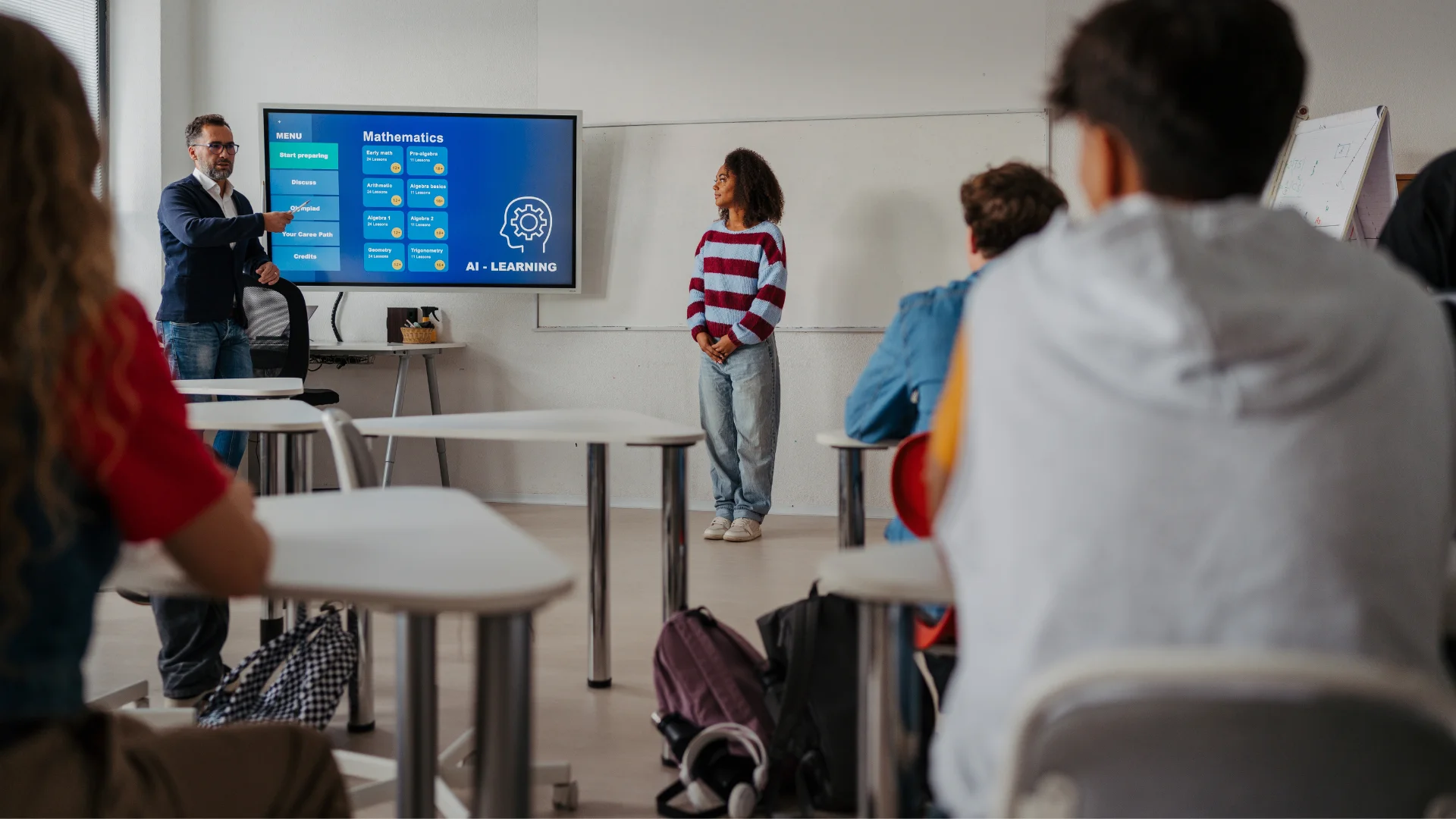
Better access for more learners
Artificial intelligence for students can make learning easier for students with different needs.
- Text-to-speech helps with reading load.
- Speech tools help students who struggle to write.
- Translation tools help multilingual learners.
- Visual tools can make hard ideas easier to grasp.
Help with hard topics and abstract ideas.
Some school topics feel too hard because they stay too abstract. AI tools can turn them into steps, visuals, examples, or short practice tasks.
- Science ideas can be shown through simple examples.
- Writing tasks can be broken into outline, draft, and edit stages.
- Math problems can be explained step by step.
- Reading tasks can include summaries, key points, and word help.
Support for critical thinking when used well
Good AI use should not stop thinking. It should push better thinking.
- Students can compare two answers.
- They can ask why a step is wrong.
- They can test ideas before writing.
- Teachers can ask students to explain their thinking, not just give the final answer.
How does artificial intelligence for students also help teachers?
- AI can help with grading drafts and short work.
- It can help teachers plan lessons or quiz ideas.
- It can sort routine tasks faster.
- That gives teachers more time for student support and class discussion.
That matters because the use of strong AI should give students more human support, not less.
Risks for students and schools
Main risks
- Wrong answers or weak sources
- Cheating and copy-paste use
- Too much screen dependence
- Less teacher-student contact
- Privacy and data safety issues
- Bias against some students, including non-native English writers
UNESCO says schools need a human-led approach, data privacy rules, and age-appropriate use. OECD-backed policy work also points to safe use, equal access, and better AI awareness for teachers and learners.
What makes AI helpful instead of harmful?
Use this short checklist
- Use AI for help, not for full answers.
- Check facts with class notes or trusted sources.
- Ask AI to explain steps, not do the task alone.
- Rewrite ideas in your own words.
- Follow school rules on AI use.
- Keep teachers in the loop when needed.

Final thoughts
The benefits of AI for students are real when the tool is used with care. It can support personal learning, provide faster feedback, offer stronger access, and provide better homework help. It can also give teachers more time for real teaching. Still, schools need clear rules, and students need to use AI as a guide, not a shortcut. That is the best way to make artificial intelligence for students useful in Canada now and in the years ahead.
FAQs
- Is AI good for students in Canada?
Yes, when students use it for learning support, fact-checking, and guided practice instead of copying full answers.
- What are the risks of AI in education?
The main risks are cheating, incorrect answers, privacy issues, bias, and excessive reliance on tools.
- Can AI replace teachers in education?
No. The best use of AI is to support teachers, save time on routine work, and free more time for student support.
- How should students use AI the right way?
Students should use it to learn steps, test ideas, review drafts, and check weak areas, while still doing their own final thinking and writing.
- What are the benefits of AI for students?
AI can provide fast feedback, personal study help, step-by-step support, better access to tools, and extra homework help after school hours.
- How does artificial intelligence for students improve homework?
It can explain hard questions, break work into steps, suggest practice, and help students fix mistakes right away.

Charles Booker
Educator | Educational Content Author
Charles Booker serves as an Educator and educational content reviewer for Homeworkify.ca. He reviews articles for factual accuracy, readability, language quality, and educational value before publication. His goal is to ensure every resource provides clear, reliable information that encourages critical thinking, effective communication, and confident learning for students.